A Home for Every Chapter: How to Choose a Property That Adapts as Your Life Evolves
There is a particular kind of buyer's remorse that does not arrive immediately after a home purchase. It surfaces five or seven years later, when the family has grown in ways that were vaguely anticipated but not planned for, when the home office that was once an afterthought has become essential, or when a parent who once lived independently now requires proximity or accommodation. The home that was perfectly calibrated to a specific life stage has become, through no fault of its own, a poor fit for the life that followed.
This experience is more common than the real estate industry typically acknowledges, and it is largely preventable. At Carrai Home, we have long believed that the most enduring residential decisions are made not by people who ask what a home offers today, but by those who ask what it will offer across the full arc of a life. What follows is a practical framework for doing exactly that.
Begin With a Honest Life Audit
Before evaluating a single property through the lens of future adaptability, it is worth conducting a clear-eyed assessment of where you are now and where you are reasonably likely to be.
Consider a five-year horizon first. Are children likely to enter the picture, or to leave the nest? Is a career transition—including the possibility of sustained remote work—plausible? Are there aging parents whose circumstances may require your involvement or proximity? Is a significant income change, in either direction, within the realm of possibility?
Extend the exercise to ten years and twenty. At the ten-year mark, consider how your physical needs may begin to shift—not necessarily dramatically, but in ways that make single-floor living more convenient or wide doorways more practical. At twenty years, contemplate retirement timelines, the possibility of downsizing or multigenerational living, and the degree to which you wish to remain in a specific community.
This exercise is not an attempt to predict the future with precision. It is an effort to surface the categories of change that a well-chosen home should be able to accommodate without requiring relocation. The goal is to reduce the number of times life's ordinary transitions force a move.
The Flexible Floor Plan: Versatility as a Core Feature
Among the most valuable—and most overlooked—qualities in a residential property is floor plan flexibility. A home with a rigid, highly specialized layout offers an exceptional experience for the specific life it was designed around and a frustrating one for any other.
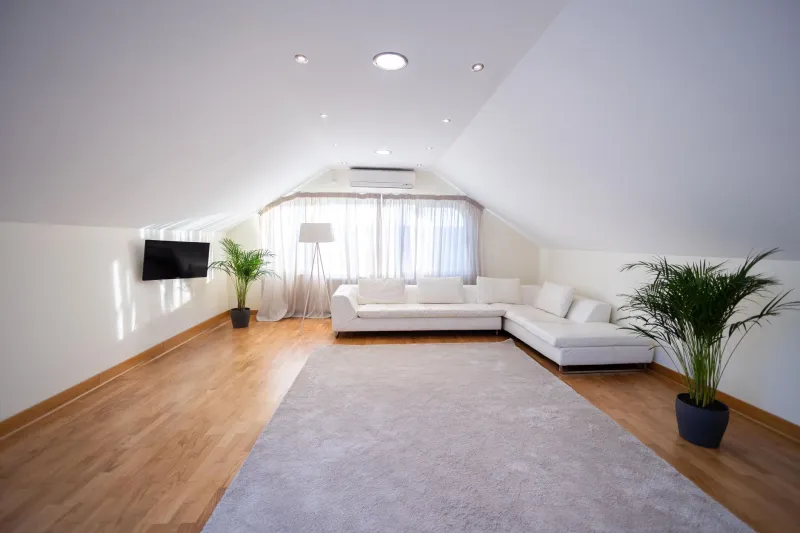
Flexible floor plans share certain characteristics. They tend to feature rooms of sufficient size and proportion to serve multiple purposes across time. A bedroom that functions as a nursery today can become a home office in seven years and a guest suite in fifteen—but only if it has adequate square footage, natural light, and proximity to a bathroom. A finished basement or bonus room above a garage offers similar versatility, capable of serving as a playroom, a teenager's retreat, a home gym, or an in-law suite depending on the decade.
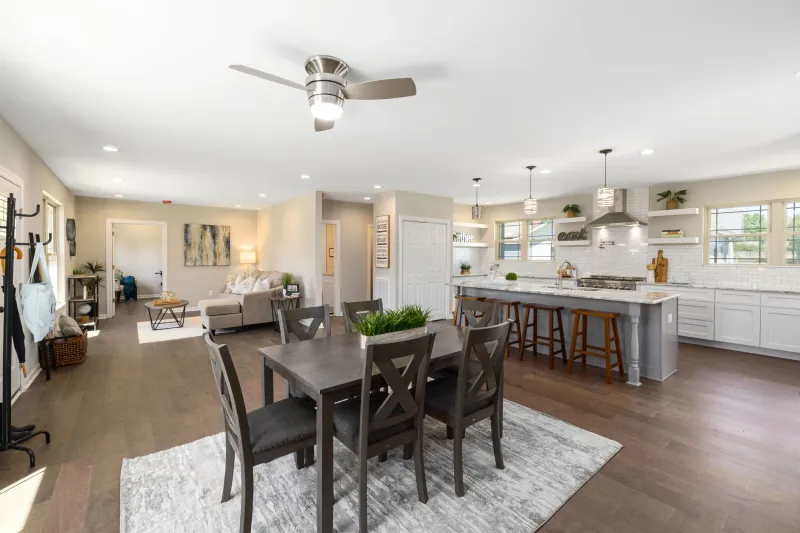
Open-concept living areas, while sometimes criticized for acoustic limitations, offer genuine adaptability: furniture arrangements can be reconfigured to accommodate different household compositions, and the absence of load-bearing interior walls makes future renovation more feasible and less expensive.
When evaluating a floor plan for longevity, ask not only whether it works for your life as it currently exists, but whether it contains the raw material—the square footage, the structural openness, the room count—to be reimagined as circumstances change.
Aging-in-Place Design: Planning for Comfort Before It Becomes Necessity
The term "aging-in-place" sometimes carries connotations that make younger buyers dismiss it as irrelevant to their current search. This is a strategic error. The design features that support comfortable living for older adults—single-floor primary living spaces, zero-step entries, wider doorways, walk-in showers with bench seating, lever-style door hardware—are also features that make a home more comfortable, more accessible, and more marketable at every stage of life.
The American Association of Retired Persons (AARP) estimates that nearly 90 percent of adults over the age of 65 wish to remain in their current home as they age. Yet the majority of American housing stock was not designed with this aspiration in mind. Properties that incorporate universal design principles—those that serve users across the full range of human ability and age—are increasingly rare and correspondingly valuable.
For buyers in their thirties and forties, selecting a home that already incorporates these features, or that can accommodate them without structural reinvention, is a form of long-range financial planning as much as it is a design preference. The cost of retrofitting a home for accessibility after the fact is substantially higher than accounting for it at the point of purchase.
The Home Office as Permanent Infrastructure
The professional landscape in the United States has changed in ways that appear durable. Remote and hybrid work arrangements, which accelerated dramatically during the early 2020s, have stabilized at rates that suggest they are not a temporary accommodation but a structural feature of the modern economy. For a significant portion of the American workforce, the home is now also a workplace—and the quality of that workplace has a direct bearing on professional performance, career satisfaction, and daily well-being.
A property evaluated for long-term adaptability must be assessed through this lens. A dedicated home office—a room with a door, adequate square footage for a desk and ergonomic chair, reliable high-speed internet infrastructure, and sufficient natural light to support sustained cognitive work—is no longer a luxury feature. It is, for many households, a functional necessity.
For dual-income households where both partners work remotely, the calculus doubles. Two dedicated workspaces, acoustically separated from each other and from primary living areas, represent a genuine quality-of-life consideration that should be evaluated with the same rigor applied to kitchen configuration or bedroom count.
Neighborhood Evolution: The Context a Home Cannot Change
A home can be renovated. Its floor plan can, within structural limits, be reconfigured. Its finishes can be updated and its systems modernized. But the neighborhood in which it sits is largely beyond the control of any individual owner, and its trajectory over the coming decades will significantly shape the experience of living there.
Evaluating neighborhood evolution requires research beyond the snapshot that a current visit provides. Examine municipal planning documents, which are publicly available in most jurisdictions, for zoning changes, infrastructure investments, and development approvals that may alter the character of the surrounding area. Review population and demographic trends for the broader region. Assess the quality and trajectory of local public schools, which influence both property values and the composition of the community over time.
Proximity to employment centers, transit infrastructure, medical facilities, and walkable retail is not merely a present-day convenience—it is a hedge against future mobility limitations and a determinant of long-term property demand. A home that is well-positioned relative to these anchors is likely to appreciate more consistently and to retain its desirability across a wider range of life circumstances.
The Long View as a Competitive Advantage
In a real estate market characterized by urgency and competition, the discipline of thinking in decades rather than months is itself a form of advantage. Buyers who evaluate properties through the lens of long-term adaptability tend to make fewer purchases over a lifetime, incur lower transaction costs, and build equity in assets that serve them across multiple life stages rather than requiring replacement each time circumstances shift.
At Carrai Home, the home you have always imagined is not simply a place that suits you today. It is a place designed—structurally, spatially, and contextually—to grow with you, to absorb the changes that life inevitably brings, and to remain, through each successive chapter, a genuine expression of the life you are building. That home exists. Finding it requires only that you know what questions to ask.