The Hidden Architecture of Well-Being: What Your Home Is Doing to Your Mind
Most Americans spend upward of 90 percent of their time indoors, and a significant portion of that time unfolds within the walls of their own homes. Yet relatively few of us pause to consider how those walls—their proportions, their colors, the light that filters through adjacent windows—are quietly shaping the way we think, feel, and recover from the demands of daily life. At Carrai Home, we believe that finding the right residence begins with understanding what a home truly does to the people who live inside it.
The science here is neither abstract nor speculative. Environmental psychology, a field that has grown considerably since the 1970s, has produced a compelling body of evidence linking residential design to measurable outcomes in stress, cognition, mood, and even immune function. What follows is a guided tour of that research—and a set of practical principles you can apply whether you are evaluating a new property or reimagining the one you already occupy.
Light as a Biological Necessity
Natural light is, without question, the single most powerful environmental variable inside a home. Exposure to daylight regulates the body's circadian rhythm, the internal clock that governs sleep-wake cycles, hormone release, and metabolic function. When that rhythm is disrupted—as it frequently is in homes with limited window exposure or poorly oriented floor plans—the downstream effects can include chronic fatigue, elevated cortisol levels, and increased vulnerability to depression.
Research published in the Journal of Clinical Sleep Medicine found that office workers seated near windows slept an average of 46 minutes more per night than their counterparts in windowless environments. The residential implication is direct: bedrooms oriented toward the east, where morning light enters early, tend to produce more consistent sleep patterns than those facing west or north.
When touring a prospective home, visit at multiple times of day. Note where natural light pools at 9 a.m. versus 3 p.m. Observe whether the kitchen—where many Americans begin their mornings—receives meaningful morning sun. These are not aesthetic preferences; they are physiological considerations.
Color Psychology: More Than a Design Trend
The relationship between color and emotional state has been studied rigorously for decades. While individual responses carry a degree of cultural variability, certain patterns emerge with enough consistency to be practically useful.
Blue tones—particularly soft, desaturated blues—are associated with reduced heart rate and lower perceived stress. This makes them well-suited for bedrooms and home offices where sustained focus or restorative rest is the primary goal. Warm yellows and oranges, by contrast, stimulate the nervous system in ways that can elevate energy and social engagement, which is why they appear frequently in kitchens and dining areas where conversation and activity are welcome.
Red, though visually striking, raises blood pressure and increases feelings of urgency—qualities that serve a restaurant well but can quietly amplify anxiety in a living room. Saturated, high-contrast color schemes in spaces intended for relaxation often work against the very purpose those rooms are meant to serve.
Interior designers with a background in wellness frequently recommend what is sometimes called a "tonal anchor" approach: selecting a dominant neutral—warm greige, soft sage, or pale slate—and allowing accent colors to introduce energy selectively rather than pervasively. The result is a home that feels visually coherent and emotionally regulated.
Spatial Organization and the Cognitive Load of Clutter
Environmental psychologist Dr. Sally Augustin, author of Place Advantage, has written extensively about how spatial disorder imposes a measurable cognitive burden on the brain. When a room contains excessive visual stimuli—surfaces crowded with objects, pathways interrupted by furniture, storage solutions that have exceeded their capacity—the brain's attentional systems work continuously to process and filter that information. Over time, this low-grade cognitive labor contributes to mental fatigue and elevated stress hormones.
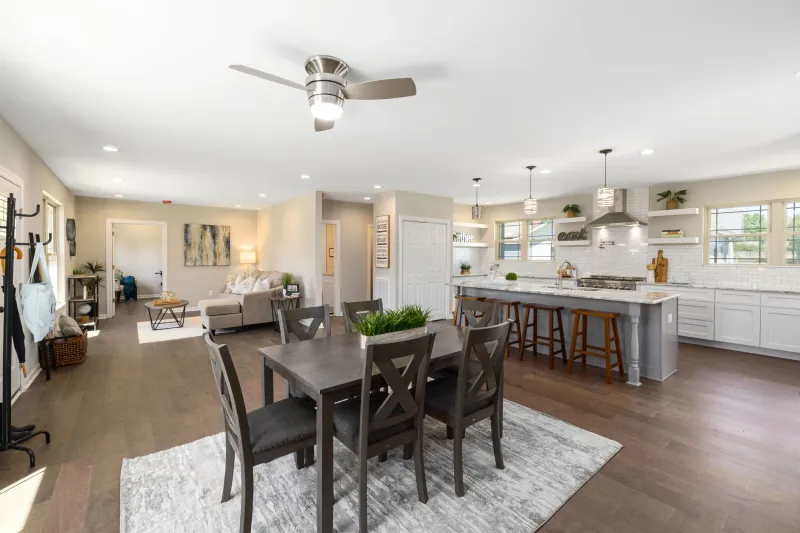
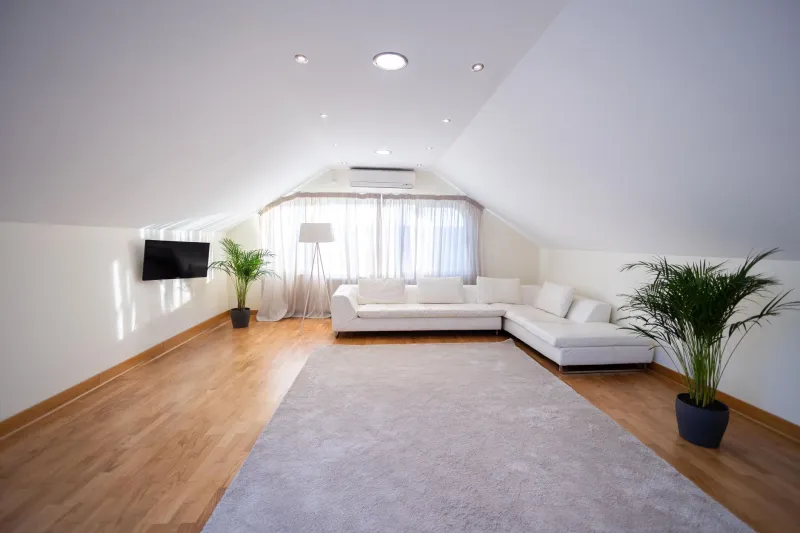
The implications for home design are meaningful. Open floor plans, when thoughtfully executed, reduce visual noise and allow the eye to rest. Adequate storage—particularly in entryways, kitchens, and home offices—enables residents to transition between activities without carrying the psychological weight of visible disorder. Even the height of ceilings plays a role: research from the University of Minnesota found that higher ceilings promote abstract, expansive thinking, while lower ceilings encourage detail-oriented focus.
This does not mean every home should aspire to minimalism. Rather, intentional organization—knowing where things belong and ensuring that spaces serve defined purposes—creates the cognitive clarity that supports emotional well-being.
Biophilic Design: Bringing the Natural World Indoors
One of the most robust findings in environmental psychology concerns the restorative effect of contact with nature. Biophilic design, which integrates natural materials, living plants, water features, and organic forms into the built environment, has been shown to reduce stress markers, accelerate recovery from illness, and improve sustained attention.
A widely cited study from the University of Michigan demonstrated that just 20 minutes spent in a natural environment significantly lowered cortisol levels. For urban residents who lack regular access to parks or green space, incorporating biophilic elements within the home offers a meaningful substitute.
Practical applications range from the straightforward—houseplants positioned near workspaces, hardwood or stone flooring, linen and wool textiles—to the more architectural, such as interior water walls, living green walls, or strategically placed skylights that frame views of the sky. When evaluating a property, the presence of mature trees visible from primary living spaces, or access to a private garden or courtyard, carries genuine psychological value beyond its aesthetic appeal.
Acoustics: The Overlooked Dimension of Residential Wellness
Noise pollution is among the most underappreciated stressors in the residential environment. The World Health Organization identifies chronic noise exposure as a significant contributor to cardiovascular disease, sleep disruption, and cognitive impairment in children. Yet many homebuyers evaluate properties with windows closed and during quiet midday hours, missing the acoustic reality of morning commuter traffic, adjacent neighbors, or nearby commercial activity.
Within the home itself, hard surfaces—polished concrete, tile, glass—reflect sound in ways that increase ambient noise levels and reduce speech intelligibility. Soft furnishings, area rugs, upholstered seating, and heavy window treatments absorb sound and create acoustically comfortable environments that support both conversation and concentration.
When assessing a potential home, request a visit during peak traffic hours. Pay attention to the insulation quality of windows and the construction materials of shared walls in attached or multi-family dwellings. These factors will not appear on a listing sheet but will profoundly influence the daily experience of living in the space.
Designing Intentionally for the Life You Want
The homes we occupy are not passive containers. They are active participants in our emotional lives, influencing how we sleep, how we think, how we relate to the people we love, and how effectively we recover from the stresses of the world outside. At Carrai Home, we encourage every prospective buyer and current homeowner to engage with this reality deliberately.
Whether you are searching for a new property or reconsidering the space you already call home, the principles above offer a framework for making decisions that serve not just your aesthetic preferences but your deepest well-being. The home you have always imagined is not merely a visual ideal—it is a place where you feel, consistently and unmistakably, like yourself.